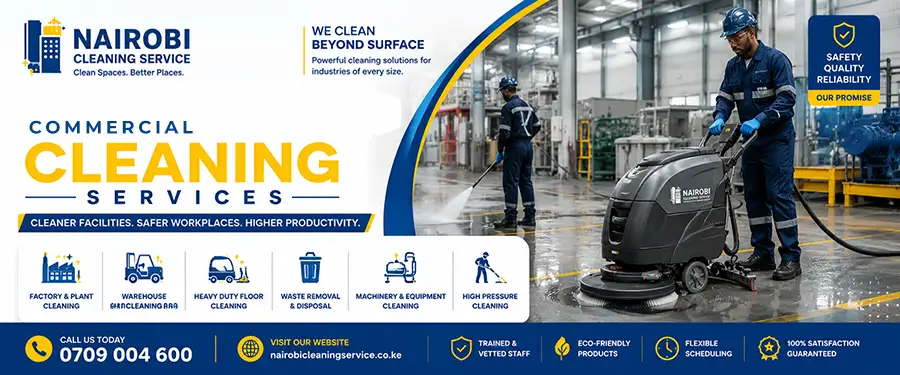
The cleaning industry in Kenya has evolved significantly over the past decade, with professional cleaning companies now managing everything from small office spaces to expansive commercial complexes, hospitals, and industrial facilities. As businesses increasingly outsource their cleaning needs, understanding how these companies handle large-scale contracts provides insight into an essential yet often overlooked sector of Kenya's service economy.
Pre-Contract Assessment and Planning
When a cleaning company in Kenya receives an inquiry for a large contract, the process begins with a comprehensive site assessment. Professional cleaning firms send their operations managers to conduct detailed surveys of the premises, noting square footage, the types of surfaces to be cleaned, special requirements, and potential challenges. This assessment forms the foundation of their proposal and operational strategy.
During this phase, companies evaluate factors such as foot traffic patterns, security protocols, working hours, and any industry-specific regulations that must be followed. For instance, cleaning a pharmaceutical facility or hospital requires different protocols than cleaning a shopping mall or office tower. The assessment also helps companies understand the client's expectations regarding cleaning frequencies, quality standards, and reporting requirements.
Staffing and Resource Allocation
Large contracts demand substantial human resources, and Kenyan cleaning companies have developed sophisticated approaches to staffing. Most established firms maintain a pool of trained cleaning personnel who can be deployed as needed. For major contracts, companies often recruit additional staff specifically for that project, ensuring they have adequate coverage for shifts, holidays, and unexpected absences.
Training is a critical component of handling large contracts. Companies invest in equipping their teams with skills in using modern cleaning equipment, handling chemicals safely, and following international cleaning standards. Many cleaning firms in Kenya now provide training in specialized areas such as infection control for healthcare facilities, or environmentally friendly cleaning practices for green-certified buildings.
The typical approach involves appointing dedicated supervisors for large contracts who serve as the primary point of contact between the cleaning company and the client. These supervisors conduct regular quality inspections, manage shift schedules, handle supply inventory, and address any immediate concerns that arise.
Equipment and Supply Chain Management
Large cleaning contracts require significant investment in equipment and supplies. Kenyan cleaning companies typically maintain inventories of industrial-grade vacuum cleaners, floor scrubbers, pressure washers, and specialized cleaning tools. For particularly large contracts, companies may invest in new equipment specifically suited to that facility's needs.
Supply chain management becomes crucial when dealing with consumables like detergents, disinfectants, mops, and waste bags. Established cleaning companies in Kenya have developed relationships with suppliers to ensure consistent availability of products, often negotiating bulk purchasing agreements to maintain cost efficiency. This is particularly important given that supply chain disruptions can directly impact service delivery.
Quality Assurance and Reporting
Maintaining consistent quality across large facilities presents unique challenges. Kenyan cleaning companies employ various quality assurance mechanisms, including checklists, digital tracking systems, and regular audits. Many firms have adopted technology solutions that allow supervisors to document completed tasks using mobile applications, providing real-time updates to clients.
Regular reporting is standard practice for large contracts. Companies typically provide weekly or monthly reports detailing work completed, supplies used, staff attendance, and any incidents or challenges encountered. This transparency helps build trust and allows clients to monitor value for money.
Financial and Risk Management
Large contracts involve substantial financial commitments from cleaning companies. They must manage payroll for numerous employees, purchase equipment and supplies in bulk, and often secure performance bonds or insurance coverage. Kenyan cleaning firms typically structure their pricing to account for these overheads while remaining competitive.
Risk management is equally important. Companies must have contingency plans for equipment breakdowns, staff shortages, or supply disruptions. Many maintain backup equipment and cross-train staff to handle multiple roles, ensuring service continuity even when unexpected challenges arise.
Compliance and Standards
Professional cleaning companies in Kenya increasingly adhere to international standards and local regulations. This includes compliance with occupational health and safety requirements, labor laws, and environmental regulations. For large contracts, particularly those involving multinational corporations or government entities, meeting these standards is non-negotiable.
Handling large cleaning contracts in Kenya requires professional cleaning companies to demonstrate operational excellence, financial stability, and adaptability. The most successful firms have invested in trained personnel, modern equipment, robust management systems, and quality assurance processes. As Kenya's commercial and industrial sectors continue to grow, the cleaning industry's ability to deliver reliable, high-quality services at scale will remain essential to supporting the country's broader economic development